Felt Cowboy Hat Care Guide: Cleaning, Reshaping, and Storage
A felt cowboy hat holds its shape and color for years longer than straw, but that durability can create a false sense of security, felt still reacts to rain, sweat, dust, and rough handling if you don’t care for it properly. Treating felt the same way you’d treat straw, or ignoring it altogether, is one of the fastest ways to shorten its life.
Here’s a complete, practical guide to caring for a felt cowboy hat, from everyday dust control to handling rain, stains, and long-term storage.
Why Felt Behaves Differently Than Straw or Fabric
Felt is made from pressed, matted fibers, usually wool or a wool blend, which gives it a dense, slightly fuzzy surface that responds to moisture and brushing in its own way. Our cowboy hat material guide covers how felt compares to straw and fabric more broadly, and that density is exactly why felt calls for its own care routine rather than borrowing straw-cleaning habits.
Brushing Felt the Right Way
A soft hat brush, moved in a circular motion against the nap first and then smoothed back down in the direction the fibers naturally lay, removes surface dust without flattening the felt’s texture. Brushing after every wear, even when the hat looks clean, keeps dust and oils from working their way deep into the fibers over time.
Handling Rain and Unexpected Moisture
A little rain won’t ruin a quality felt hat, light moisture typically just needs to air-dry naturally, away from direct heat, with the brim’s shape gently supported while it dries. Heavier soaking is more of a concern, since felt that dries unevenly or too quickly can warp, so patience during drying matters more than speed.
Removing Dust and Light Surface Stains
For light stains or ground-in dust that brushing alone won’t lift, a clean, dry sponge or a specialized felt eraser, gently rubbed over the area, handles most surface marks without introducing moisture. Reaching for water or soap too early is a common mistake, dry methods should always come first with felt.
Treating Sweat Stains Around the Band
Sweat stains along the inner band are the most common felt hat issue, especially with regular wear, and a slightly damp cloth with a drop of mild soap, worked gently rather than scrubbed, usually lifts them. Letting the band area air-dry fully afterward prevents trapped moisture from affecting the felt’s shape where it meets the band.
What Never to Use on Felt
Skip household cleaners, alcohol-based products, and anything abrasive, all of which can strip felt’s natural oils and leave the surface looking dull or patchy. Heavy scrubbing is just as risky, since it can flatten the nap permanently in a way that’s difficult to restore.
Steaming Out Dents and Reshaping the Crown
A felt hat that’s picked up a dent or lost some of its crown shape usually responds well to gentle steam, held a few inches away rather than applied directly, followed by careful reshaping by hand while the felt is warm and pliable. This is a slow process, small adjustments held briefly work better than trying to force the shape back all at once.
Brim Care and Keeping the Curve Sharp
A felt brim that’s gone soft or uneven can usually be re-curved with the same light steam and hand-shaping approach used on the crown, working in small sections rather than the whole brim at once. Letting the felt cool and set in the corrected position before wearing the hat again helps the new shape hold.
Caring for Felt in Humid Climates
High humidity can leave felt feeling slightly damp or heavy even without rain, and in these conditions it helps to let the hat air out in a well-ventilated spot between wears rather than storing it away immediately. A hat that’s stored while still holding moisture is far more likely to develop a musty smell or mildew over time.
Storing a Felt Hat Properly
Our guide to storing cowboy hats covers the basics that apply to felt as much as any material, resting the hat on a stand or in a hat box that supports the crown, away from direct sunlight or crushing weight. Felt that’s stored flat or stacked under other items can develop permanent creases that steam alone won’t fully correct.
Dealing With Odor in a Felt Hat
Felt can absorb odors from smoke, sweat, or general wear more readily than straw, and a light sprinkle of baking soda left inside the hat overnight, then brushed out, is a gentle way to neutralize mild odors without introducing moisture. For stronger odors, airing the hat out in a well-ventilated space for a day or two is usually more effective than any product.
How Often to Clean a Felt Hat
A quick brush after each wear and a more thorough check every few weeks, rather than waiting for visible staining, keeps a felt hat looking sharp without over-handling the material. Felt actually benefits from regular light brushing, since it helps distribute natural oils evenly across the surface.
Breaking In a New Felt Hat
If you’ve just bought a felt hat, our guide to breaking in a new cowboy hat covers how to soften a stiff new felt without damaging it, which pairs naturally with the ongoing care routine covered here. A hat that’s broken in correctly from the start tends to need less corrective reshaping later on.
Traveling With a Felt Hat
Felt holds its shape well in transit compared to straw, but it still benefits from the protection covered in our guide to packing and traveling with a cowboy hat, especially a rigid case that keeps the crown from getting crushed under other luggage. A felt hat that arrives at a festival or event already misshapen is much harder to correct on the spot.
Caring for Decorative Felt Hats
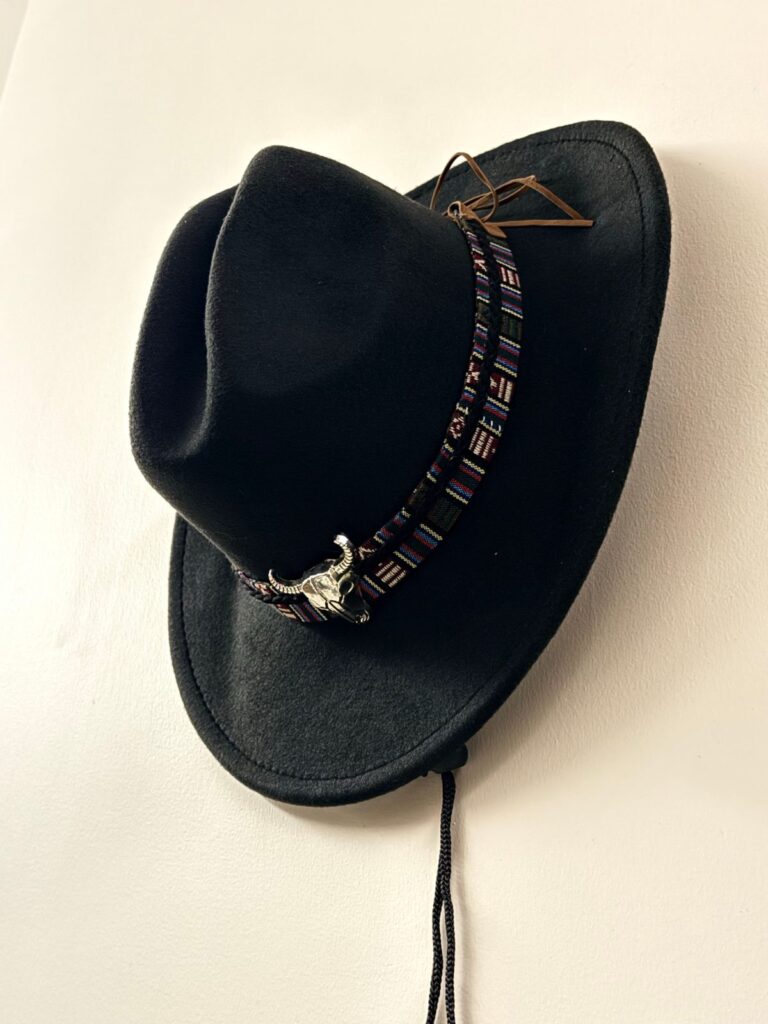
A felt hat with an attached band, pin, or feather trim needs extra care around those elements specifically, since cleaning too close to an adhesive-backed decoration can loosen it. Our guide to accessorizing a cowboy hat covers how these pieces typically attach, which is useful context before cleaning around them.
When a Felt Hat Needs Professional Attention
Heavy staining, a crushed crown that won’t reshape with home steaming, or felt that’s started to thin and wear through in spots are all signs it may be worth a professional hat cleaner or milliner rather than continued home care. Catching these issues early, before the felt itself is structurally compromised, gives a professional far more to work with.
Cleaning Before Long-Term Storage
Always give a felt hat a full brush-down and let it air out completely before storing it away for an extended period, like the off-season between events, since trapped oils or moisture left for months can set into the felt. A hat cleaned and properly aired right before storage comes out looking noticeably better the next time you reach for it.
Common Mistakes to Avoid
- Using water or soap before trying a dry brush or felt eraser. Dry cleaning methods should always come first with felt to avoid unnecessary moisture exposure.
- Storing a felt hat while it’s still slightly damp. This is one of the fastest ways to end up with a musty smell or mildew spotting.
- Scrubbing stains aggressively instead of blotting gently. Hard scrubbing flattens the nap and can leave permanent texture damage.
- Applying direct heat to dry a wet felt hat quickly. Slow, natural air-drying protects the shape far better than rushing the process.
Frequently Asked Questions
Can I get my felt cowboy hat wet?
Light rain is generally fine as long as the hat air-dries naturally afterward, but heavier soaking should be dried slowly to avoid warping the shape.
What’s the best way to remove dust from a felt hat?
A soft hat brush moved against the nap and then smoothed back down removes most surface dust without needing any liquid.
How do I get sweat stains out of a felt hat band?
A slightly damp cloth with a small amount of mild soap, worked gently around the band, usually lifts sweat stains without affecting the felt itself.
Can a dented or crushed felt crown be fixed at home?
Yes, in most cases. Light steam combined with careful hand-shaping can restore a felt crown, though deep or long-set dents may need a professional.
How do I stop my felt hat from smelling musty?
A light sprinkle of baking soda left inside overnight, then brushed out, along with airing the hat in a well-ventilated space, usually resolves mild odors.
How often should I brush my felt cowboy hat?
After every wear is ideal, since regular brushing distributes natural oils evenly and prevents dust from settling into the fibers.
Is felt or straw easier to maintain?
Felt generally holds its shape longer with less frequent reshaping, but it needs more careful handling around moisture than straw does.
Final Thoughts
A felt cowboy hat rewards consistent, gentle care with years of reliable wear, and most of that care comes down to a quick brush, the right drying approach, and proper storage between uses. Browse our full collection of cowboy hats to find a felt style built to last.