Felt vs. Straw vs. Fabric: The Complete Cowboy Hat Material Guide
Not all cowboy hats start from the same foundation. Long before any sequins, rhinestones, or mirror tiles get added, every hat begins as a base material, felt, straw, or a fabric/synthetic blend, and that base quietly shapes everything from how the hat feels on your head to how long it lasts and how it handles a night of dancing.
If you’ve ever wondered why one hat feels noticeably heavier than another, or why a straw hat seems better for daytime than a felt one, the answer almost always comes back to material. Here’s a complete breakdown of felt, straw, and fabric cowboy hats, so you can choose the right base for your next piece.
Why Base Material Matters More Than You’d Think
Embellishment gets most of the attention in product photos, but the base material underneath is what actually determines comfort, durability, and how well a hat holds its shape over a full season of wear. Two hats can look nearly identical in a thumbnail and still feel completely different once you put them on, simply because one is felt and the other is straw. Understanding the three main base materials, felt, straw, and fabric, before you buy makes it far easier to pick a hat that actually suits your climate, your event, and how long you expect to keep wearing it.
Felt Cowboy Hats: Pros and Cons
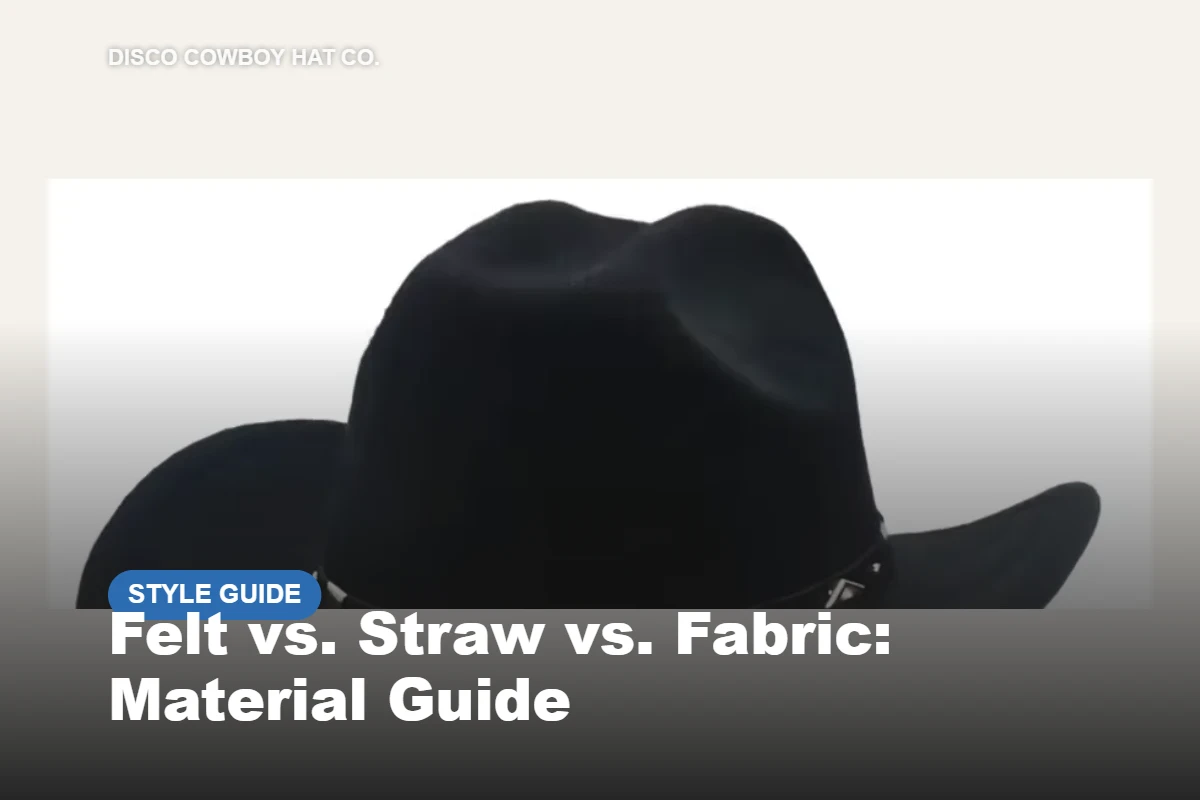
Felt is a dense, tightly formed material that holds its shape well and gives a hat a slightly more structured, substantial feel. It takes shaping easily, which is part of why felt is the go-to choice for crisp crown creases like a cattleman or gambler shape, and it tends to feel warmer, making it a strong choice for cooler-weather events. The tradeoff is weight: felt hats are generally heavier than straw, which can matter if you’re wearing one for hours at a stretch.
Straw Cowboy Hats: Pros and Cons
Straw is lighter, more breathable, and naturally suited to hot weather, daytime festivals, and anywhere you’ll be in direct sun for hours. It has a more relaxed structure than felt, and a woven texture that gives it a distinct look even before any embellishment is added. Straw is also more prone to cracking if it’s bent or shaped too aggressively, so it rewards gentler handling than felt does.
Fabric and Synthetic Base Cowboy Hats
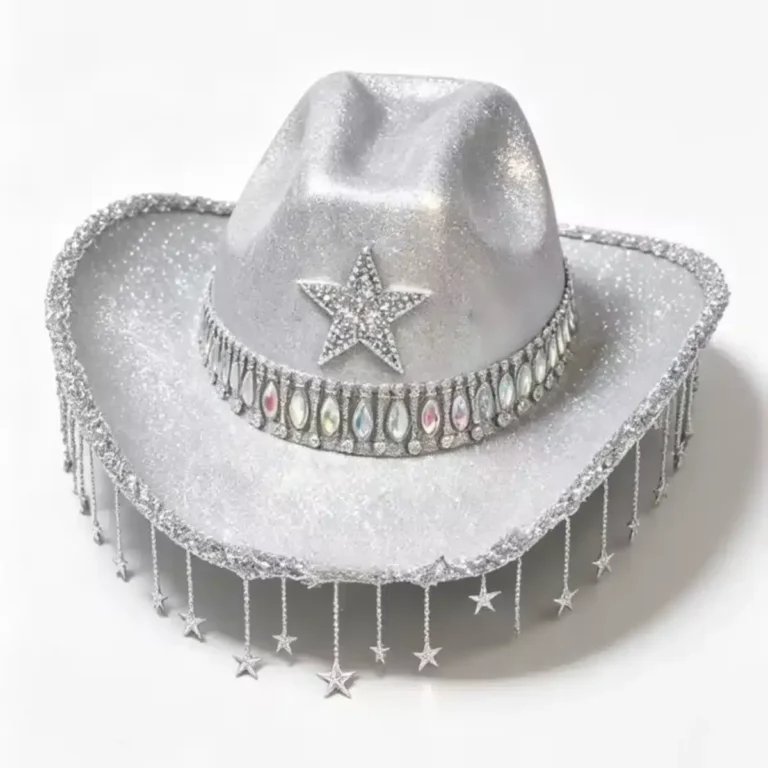
Many disco and festival-style cowboy hats use a fabric or synthetic base rather than traditional felt or straw, since these materials hold embellishment, like sequins or mirror tiles, more securely and evenly than a woven straw surface would. They’re often lighter than felt while still offering a stable base for heavier decoration, which is part of why fully embellished statement hats frequently use a fabric foundation rather than natural felt.
How Material Affects Embellishment
A dense felt or fabric base gives adhesive-applied sequins, rhinestones, and mirror tiles a smoother, more even surface to adhere to, while straw’s natural texture can make some flatter embellishment styles sit less evenly. This is part of why our mirror vs. sequin vs. rhinestone comparison almost always involves a felt or fabric base rather than straw underneath the decoration.
Material and Climate: What Works Best Where
Straw is the clear choice for hot, sunny conditions, daytime festivals, beach parties, and anywhere heat and humidity are a factor, since it breathes far better than felt. Felt performs better in cooler temperatures and indoor venues, where its added warmth and structure are an advantage rather than a drawback. Fabric-based hats sit in between, and their comfort in different climates depends more on the specific weave and lining than on the base material alone.
Material and Durability: What Holds Up to a Full Festival Season
Felt tends to hold its shape the longest across repeated wear, resisting the kind of edge-cracking that straw can develop with heavy handling. Fabric bases hold embellishment securely over time but can show wear at stress points, like the crown crease, faster than felt does. If you’re planning to wear one hat across an entire festival season rather than a single event, felt or a well-constructed fabric base is generally the more durable choice.
How Material Affects Weight and All-Day Comfort
Straw is consistently the lightest option, which matters enormously if you’re wearing a hat for a full day rather than just a few photos. Felt’s added weight can start to feel noticeable after several hours, particularly with a taller crown style, while fabric bases usually land somewhere in the middle depending on how much embellishment has been added on top.
Material and Price: What You’re Paying For
Base material is one of several factors that affects cowboy hat pricing, alongside embellishment complexity and construction quality. A well-made felt hat often costs more than a comparable straw one, since felt requires more material and shaping work, though a heavily embellished fabric-based hat can cost more than either if the decoration itself is labor-intensive to apply.
Choosing Material Based on How Often You’ll Wear It
A hat for a single costume or one-time event doesn’t need the same material investment as one you’ll wear across multiple festivals or seasons. If you know you’ll be reaching for the same hat again and again, prioritizing a durable felt or well-constructed fabric base over the cheapest straw option is usually worth the difference in how long it holds up.
How Material Interacts With Crown and Brim Style
A crisp, defined shape like a cattleman crease holds noticeably better on felt than on straw or a lighter fabric base, since felt’s density gives it the structure to keep a sharp line. Our guide to cowboy hat crown and brim styles covers this in more detail, but as a general rule, the more defined the crease you want, the more that favors felt over straw. A rounder gambler or telescope crown is more forgiving across all three materials, since there’s less sharp structure to maintain in the first place.
Material Considerations for Group and Bachelorette Orders
When you’re outfitting a group, like a full bachelorette party, mixing materials across the group is worth considering rather than assuming everyone needs the identical base. An outdoor daytime portion might call for straw for comfort, while a nighttime party segment often favors a fabric-based sparkle hat instead. Coordinating finish and color across the group matters more for a cohesive look than making sure every single hat shares the same base material.
Caring for Each Material Differently
Felt and straw need different care approaches, felt tolerates light steam for reshaping while straw generally doesn’t, and both benefit from the storage tips in our guide to storing cowboy hats. For cleaning embellished fabric-based hats specifically, our guide to cleaning and storing a sequin or mirror hat covers the gentler techniques those materials need.
Common Mistakes to Avoid
- Choosing straw for a cold-weather indoor event. Straw’s breathability becomes a drawback rather than a benefit once temperatures drop.
- Assuming all fabric-based hats handle heat the same way. Heavier embellishment can trap warmth regardless of the base material underneath.
- Shaping straw as aggressively as felt. Straw cracks more easily and rewards gentler, more gradual handling.
- Ignoring material when comparing prices. A lower price sometimes reflects a cheaper base material rather than a better deal on the same hat.
Frequently Asked Questions
What’s the difference between a felt and straw cowboy hat?
Felt is denser, warmer, and holds its shape well, making it better for cooler weather, while straw is lighter and more breathable, better suited to hot, sunny conditions.
Is a fabric-based cowboy hat as durable as felt?
It depends on construction quality. A well-made fabric base holds embellishment securely, but felt generally resists shape loss and cracking better over a long festival season.
Which material is best for a hot, outdoor summer festival?
Straw is the best choice for heat and sun, since it breathes far better than felt or a heavier fabric base.
Why do most sequin and mirror hats use a fabric base instead of straw?
Fabric and felt bases give embellishment a smoother, more even surface to adhere to than straw’s natural woven texture provides.
Does base material affect how much a cowboy hat costs?
Yes. Material is one factor in pricing, alongside embellishment complexity and construction quality, so felt and heavily decorated fabric hats often cost more than basic straw.
Can I shape a straw hat the same way I’d shape a felt one?
Not exactly. Straw cracks more easily under aggressive shaping, so gentler, gradual handling works better than the firmer techniques felt can tolerate.
Which material is heaviest to wear for a full day?
Felt is generally the heaviest, straw the lightest, with fabric-based hats falling in between depending on how much embellishment has been added.
Final Thoughts
Choosing the right base material comes down to matching felt, straw, or fabric to your climate, your event, and how often you plan to wear the hat. Browse our full collection of cowboy hats to find the right material and finish for your next look.