Cowboy Hat vs. Cowgirl Hat: What’s the Difference and Which One Should You Wear?
“Cowboy hat” gets used as the catch-all term for pretty much any wide-brimmed western hat, but if you’ve spent any time shopping for one, you’ve probably noticed some styles are labeled “cowgirl hat” instead. So is there an actual difference, or is it just marketing? The short answer is both: there are some real structural differences, but the line between the two has blurred a lot in recent years.
This guide breaks down what genuinely separates a cowboy hat from a cowgirl hat, and helps you figure out which one actually fits what you’re looking for.
Is There Really a Difference?
Traditionally, yes. Cowboy hats were designed with function first: sun and rain protection for long days working outdoors. Cowgirl hats emerged later as a more fashion-forward take on the same silhouette, often with a smaller, more fitted profile designed to flatter rather than purely protect. Today, especially in festival and fashion contexts, the terms overlap heavily, and a lot of what’s sold as a “cowgirl hat” is really just a cowboy hat shape sized and styled for women.
Shape and Crown Differences
Classic cowboy hats tend to have a taller, more structured crown, often with a defined crease down the center or a pinch at the front. Cowgirl hats commonly have a slightly shorter, more rounded crown, giving a softer overall silhouette. Neither shape is “correct.” It really comes down to which profile suits your face and personal style better.
Brim Width and Styling
Cowboy hats traditionally lean toward wider, flatter brims built for maximum sun coverage. Cowgirl hat brims are often slightly narrower or curved upward at the sides, a styling detail that frames the face more than it maximizes shade. If sun protection is your priority, a wider brim is the better functional choice regardless of which label the hat carries.
Sizing and Fit Differences
This is where the difference matters most practically. Hats marketed as cowgirl styles are generally cut to a smaller average head size and often designed with a more tailored fit through the crown. If you have a larger head size, a hat labeled “cowboy” may actually fit better regardless of gender marketing, and vice versa. Always check the actual size measurements rather than assuming based on the label alone.
Materials and Construction
Both styles use the same core materials, primarily felt and straw, with rigid or semi-rigid structuring underneath. Where they can differ is in finishing details: cowgirl hats more often include decorative trim, embellishment, or a more fashion-oriented band, while traditional cowboy hats tend to favor simpler, more utilitarian bands and trim.
Color and Embellishment Differences
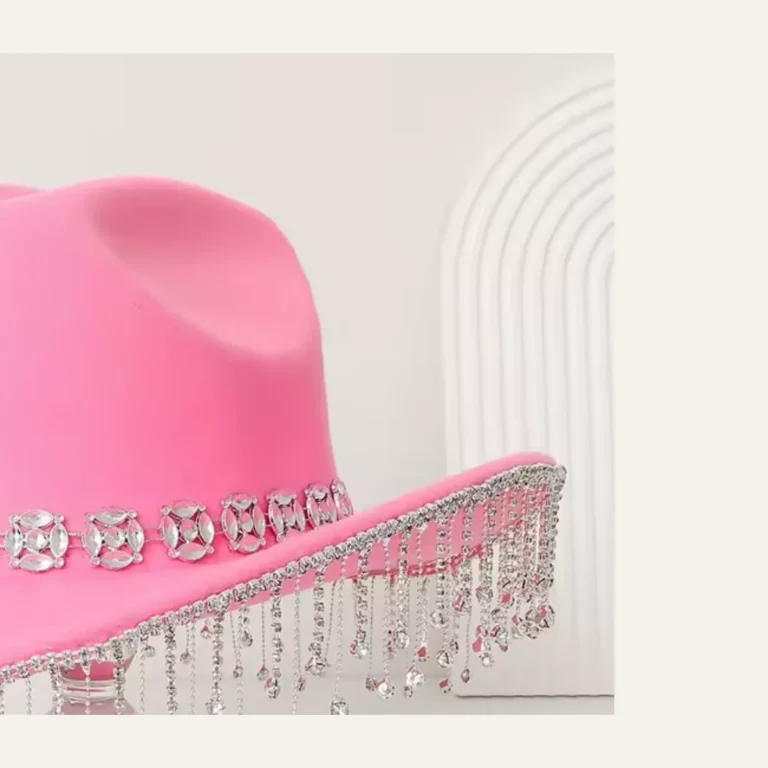
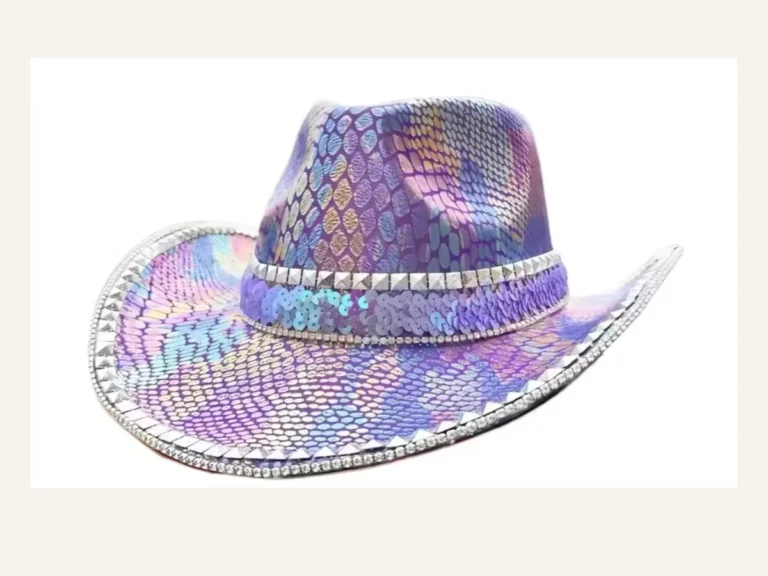
Traditional cowboy hats are usually found in classic neutrals: black, brown, tan, and natural straw. Cowgirl hats, especially in festival and disco contexts, embrace a much wider color and embellishment range, including sequin, rhinestone, mirror, and glitter finishes that would be unusual on a traditional working cowboy hat.
Which One Should You Wear?
For Festivals and Events
The distinction barely matters here. What matters is finding a shape, brim width, and embellishment level that fits your outfit and the event, whether it’s labeled cowboy or cowgirl.
For Everyday Wear
A cowboy hat’s wider brim and simpler styling tends to work better for daily rotation, since it reads as less occasion-specific and offers more genuine sun coverage.
For Costume and Themed Parties
Cowgirl hats, especially embellished styles, tend to lean further into the fun, festive end of western style, making them a natural fit for costume parties, bachelorette themes, and disco-inspired events.
A Brief History of the Two Styles
The cowboy hat’s roots trace back to practical ranch wear in the 1800s, built for sun, rain, and long days on horseback. As women became more visible in rodeo, ranching, and later western entertainment, hat makers began producing versions styled specifically for women, which gradually became what we now call the cowgirl hat: a bit more fitted, a bit more decorative, and increasingly tied to fashion as much as function.
By the mid-1900s, western films and rodeo culture had cemented both styles as distinct, recognizable silhouettes, and that basic split has carried through to how hats are marketed today, even as the practical differences have narrowed.
Regional and Brand Naming Differences
Not every retailer uses “cowboy” and “cowgirl” the same way. Some brands label every hat “cowboy hat” regardless of who it’s designed for, while others use “cowgirl hat” specifically to signal a smaller size range or a more fashion-forward, embellished style. Because there’s no single industry standard, it’s worth looking at the actual measurements and design details rather than relying on the label alone when you’re shopping.
Common Misconceptions
- “Cowgirl hats are just smaller cowboy hats.” Sizing can differ, but the crown shape, brim curve, and styling details are genuinely different design choices, not just a scaled-down version of the same hat.
- “Men can’t wear cowgirl-labeled hats and vice versa.” The labels mostly reflect sizing and styling conventions rather than a strict rule. Plenty of people wear whichever shape fits and looks best on them.
- “One is more ‘authentic’ than the other.” Both trace back to genuine western wear history. Cowgirl hats simply evolved as their own distinct style rather than being a lesser version of the cowboy hat.
How to Measure for the Right Fit
Regardless of which label a hat carries, fit comes down to the internal circumference of the band, not the outer silhouette. Wrap a soft measuring tape around your head about an inch above your eyebrows and ears, where the hat will actually sit, and compare that number to the brand’s size chart rather than guessing from a general size like small, medium, or large.
If your measurement falls between two sizes, most people find sizing up slightly more comfortable than sizing down, since a hat that’s a touch loose can be adjusted with an inner band, while one that’s too tight has no real fix short of exchanging it.
How Our Styles Fit Into This
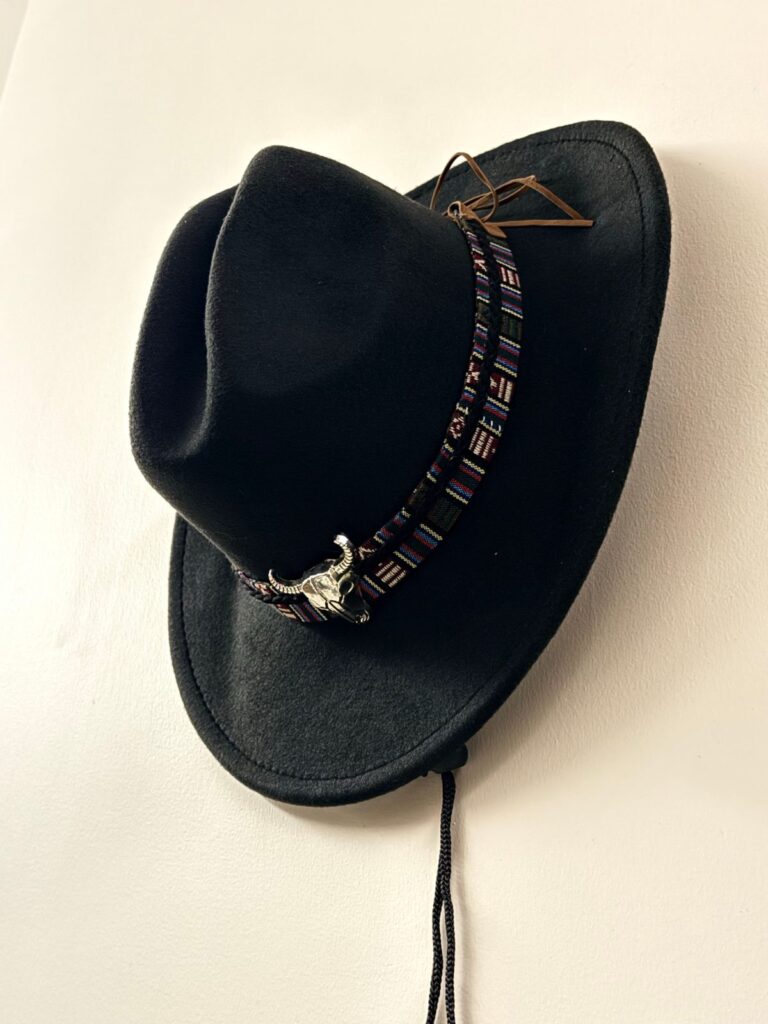
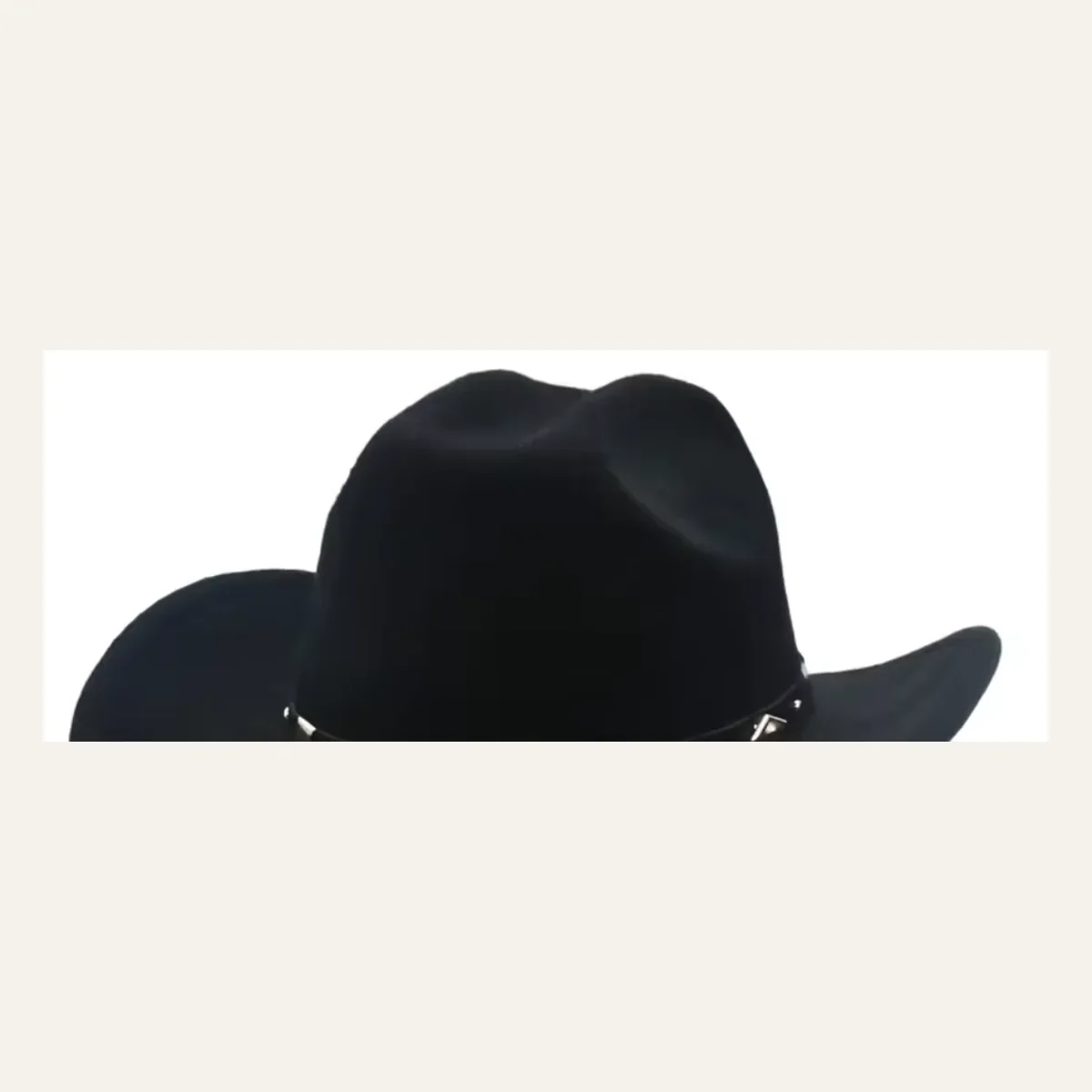
Most of what we carry falls into the cowgirl hat category by traditional definition: fitted crowns, styling-forward details, and finishes like mirror, sequin, and rhinestone that lean into fashion rather than pure function. If you want something closer to a traditional cowboy hat shape, our Black Felt Classic Western Cowboy Hat is the closest fit in our collection, with a simpler, wider-brim profile.
What About Unisex Styles?
A growing number of hats are designed and marketed as unisex, sitting deliberately between the traditional cowboy and cowgirl profiles: a medium crown height, a moderate brim width, and minimal gendered styling cues. These are worth considering if you’ve tried both traditional shapes and neither felt quite right, since a unisex cut often splits the difference in a way that works well for a broader range of face shapes and head sizes.
Frequently Asked Questions
Is there an actual difference between a cowboy hat and a cowgirl hat?
Yes, traditionally. Cowboy hats favor a taller crown and wider, flatter brim built for function, while cowgirl hats often have a more rounded crown and narrower, styled brim built more for fashion.
Can women wear cowboy hats instead of cowgirl hats?
Absolutely. The labels mostly reflect sizing and styling conventions, and plenty of people choose whichever shape and fit suits them best regardless of the label.
Which style offers better sun protection, cowboy or cowgirl hats?
Traditional cowboy hats generally offer more sun coverage due to their wider, flatter brim, while cowgirl hats often prioritize a flattering fit over maximum shade.
Are cowgirl hats smaller than cowboy hats?
Often, yes, since cowgirl hats are typically sized for a smaller average head size, but this varies by brand, so it’s worth checking actual measurements rather than assuming.
Why do festival and disco cowboy hats look different from traditional western hats?
Festival styles prioritize fashion and statement-making finishes like sequin, mirror, and rhinestone, which trace more directly from the cowgirl hat tradition than from the plainer, function-first cowboy hat.
Is one style more historically accurate than the other?
Both have genuine roots in western wear history. Cowgirl hats developed as their own distinct style over time rather than being a lesser or less authentic version of the cowboy hat.
How do I know which shape will suit me best?
Try both a taller, straighter crown and a shorter, more rounded one if possible. Face shape and personal style matter more here than strictly following the cowboy or cowgirl label.
A Quick Decision Guide
If you’re still not sure which way to lean, a simple gut check helps: choosing based on function, sun coverage, everyday wear, a simpler finish, points toward a traditional cowboy hat shape. Choosing based on fashion, embellishment, a fitted flattering profile for a specific event, points toward what’s typically labeled a cowgirl hat. Most people end up owning at least one of each once they start building out a western wardrobe.
Final Thoughts
The line between cowboy and cowgirl hats has blurred quite a bit, and for most events, it matters far less than finding the right fit, brim width, and finish for what you’re actually wearing it to. Browse our full collection of cowboy and cowgirl-style hats to find your best fit.