Layering a Cowboy Hat with a Bandana or Scarf: Styling Guide
A bandana or scarf is one of the easiest ways to add another layer to a cowboy hat look without buying anything new for the hat itself. Tied at the neck, wrapped around the hat band, or knotted at the wrist, it pulls the whole outfit together in a way a hat worn alone sometimes doesn’t.
Here’s how to actually pair a bandana or scarf with a cowboy hat so it looks intentional, from color coordination to where to tie it, plus a few combinations that consistently work for festivals, photos, and everyday styling.
Why This Combination Works So Well
A cowboy hat and a bandana share the same western, outdoor-ready visual language, which is why the pairing reads as cohesive rather than mismatched. Adding fabric texture at the neck or wrist also breaks up an outfit that’s otherwise all solid pieces, giving the eye somewhere else to land besides just the hat.
Classic Neck Bandana Styling
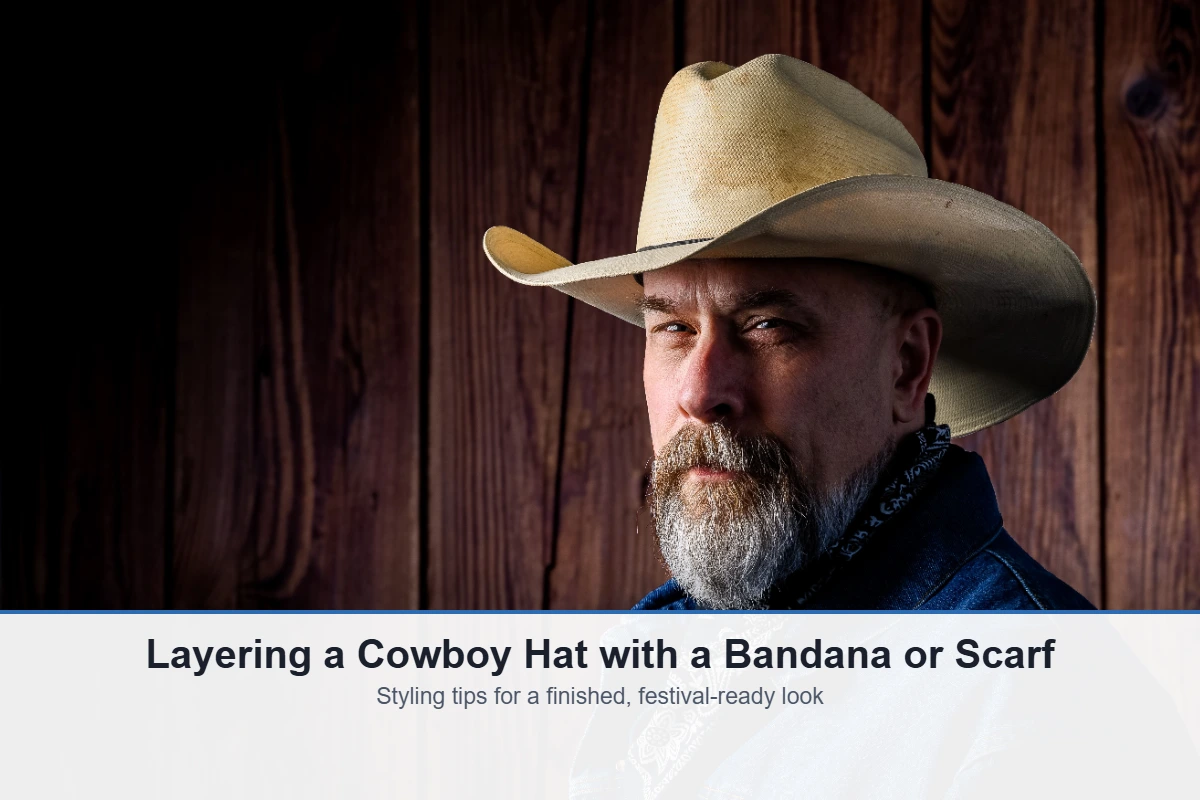
A bandana folded into a triangle and tied loosely at the back of the neck is the most traditional way to wear one alongside a cowboy hat, and it works with almost any hat color as long as you’re intentional about the combination. Leaving a little bit of slack rather than tying it tightly keeps it looking relaxed rather than costume-like.
Wrapping a Bandana Around the Hat Band
Instead of wearing a bandana at the neck, wrapping it around the hat’s existing band adds color and pattern directly to the hat itself. Our guide to accessorizing a cowboy hat with bands, pins, and feathers covers this technique in more detail, and a bandana works as an easy, low-commitment alternative to a fixed decorative band.
Matching Versus Contrasting Colors
A bandana that closely matches your hat color creates a subtle, coordinated look, while a contrasting color makes more of a statement and draws the eye upward toward your face. Our cowboy hat color guide covers how to think about color pairing more broadly, and the same logic applies directly to choosing a bandana or scarf.
Silk Scarves as a Dressier Alternative
A silk or satin scarf tied at the neck reads as noticeably dressier than a classic cotton bandana, which makes it a better fit for an evening event or a more polished festival look. If you’re pairing a hat with an outfit that’s already leaning elevated rather than casual, a scarf usually suits the overall look better than a bandana.
Wrist and Bag Styling With Leftover Fabric
A bandana tied around the wrist or looped through a bag strap extends the same color and pattern into another part of your outfit without needing a second accessory purchase. This is a simple way to make a single bandana do more visual work across an entire look.
Festival-Specific Pairing Ideas
For an outdoor festival look, like the styling covered in our festival outfit ideas guide, a brighter or patterned bandana tends to photograph well against a plainer hat, while a heavily embellished sequin or rhinestone hat usually looks best with a simpler, solid-color bandana so the two don’t compete.
Everyday Outfit Pairing
For more casual, everyday cowboy hat styling, covered in our everyday outfits guide, a neutral bandana in denim blue, rust, or cream tends to work across the widest range of outfits without requiring much additional color planning.
Pattern Mixing Without It Looking Cluttered
If your hat has any pattern or texture of its own, like fringe or an embellished band, keeping the bandana solid or subtly patterned avoids visual overload. Saving a bold, busy bandana print for a plainer hat generally keeps the overall look balanced rather than competing for attention.
Rodeo and Western-Themed Event Styling
For a rodeo or heavily western-themed event, covered in our rodeo outfit guide, a classic paisley or bandana-print scarf tends to feel the most period-appropriate and cohesive with the rest of a western outfit.
Seasonal Considerations for Scarf Weight
A lightweight cotton bandana works comfortably in warm festival weather, while a thicker scarf can add welcome warmth for a cooler evening event without needing a full jacket change. Choosing the fabric weight based on the actual weather, not just the color, keeps the styling practical as well as good-looking.
Practice Tying Before the Event
Trying a few different tying styles, at the neck, on the hat band, or at the wrist, before the actual event day helps you land on the version you’re most comfortable wearing for several hours. A style that looks great for five minutes but keeps slipping isn’t worth the hassle once you’re actually out.
Group Coordination With Bandanas
When a group is coordinating cowboy hats for an event, giving each person a bandana in the same color family but not identical patterns often looks more natural in photos than requiring an exact match. It keeps the group visually connected without looking overly matchy.
Caring for a Bandana or Scarf After Wear
A cotton bandana is generally machine-washable and forgiving of a long, sweaty day outdoors, while a silk or satin scarf needs gentler hand-washing or spot cleaning to avoid damaging the fabric. Checking the care label before an event, rather than after a stain sets in, saves a favorite piece from premature wear.
Building a Signature Look Around One Combination
Once you find a hat, bandana, and tying style that consistently works for you, repeating that combination across multiple events, with small variations in color, builds a recognizable personal style rather than starting from scratch every time. This also makes getting ready faster, since you’re not re-deciding the whole outfit each time.
Layering a Bandana Under a Hat Band Itself
For a subtler look, tucking a thin strip of bandana fabric just under the existing hat band, so only a small edge peeks out, adds a hint of color without the fuller wrapped-band effect. This works especially well when you want a small coordinating detail without it becoming the main focal point of the hat.
Choosing Based on Hair and Hairstyle
If you’re also wearing your hair in a style covered in our cowboy hat hairstyles guide, a neck bandana generally works better with hair pulled back or braided, since loose hair can compete visually with a bandana knot at the neck. Coordinating the two together, rather than deciding on each separately, gives a cleaner overall result.
Bandana Placement for Different Hat Shapes
A hat with a wider, more dramatic brim tends to draw enough visual attention on its own, so a smaller, more understated bandana knot at the neck often balances it better than a large, bulky tie. A narrower brim or lower-profile crown, by contrast, can handle a bolder bandana or scarf without the overall look feeling top-heavy.
Shopping for a Bandana or Scarf to Match a Specific Hat
Bringing a photo of your hat, or the hat itself if you’re shopping in person, makes it much easier to judge an accurate color match than relying on memory alone. Lighting in a store can shift how a color reads, so checking the pairing in natural daylight before committing to a purchase avoids an off-toned mismatch once you’re actually wearing both together.
Common Mistakes to Avoid
- Choosing a bandana pattern that competes with an already busy or embellished hat. Keep one element simple so the two don’t visually fight.
- Tying a neck bandana too tightly. A little slack looks more natural and stays more comfortable through a long event.
- Wearing a heavy scarf in hot festival weather just for the look. Choose fabric weight based on the actual conditions, not styling alone.
- Never testing the tie before the event. Practicing ahead of time avoids fumbling with knots once you’re already out the door.
Frequently Asked Questions
Should a bandana match or contrast with my cowboy hat color?
Either works. Matching creates a subtle, coordinated look, while contrasting makes more of a statement and draws attention upward.
Is a silk scarf better than a cotton bandana for a cowboy hat?
It depends on the occasion. A silk scarf looks dressier and suits an evening event, while cotton bandanas are more casual and festival-appropriate.
Can I wrap a bandana around my hat instead of my neck?
Yes. Wrapping it around the existing hat band is a simple, low-commitment way to add color and pattern directly to the hat.
What bandana color works with most cowboy hat styles?
Neutral tones like denim blue, rust, or cream tend to pair well across the widest range of hat colors and outfits.
Should I choose a patterned or solid bandana for an embellished hat?
A solid or subtly patterned bandana usually balances a heavily embellished hat better than a busy, competing print.
Does bandana fabric weight matter for outdoor events?
Yes. A lightweight cotton bandana suits warm weather, while a thicker scarf adds welcome warmth for cooler evening events.
Should a coordinated group all wear identical bandanas?
Not necessarily. Matching color family without identical patterns often looks more natural in group photos than an exact match.
Final Thoughts
A bandana or scarf is a small addition that makes a real difference in how finished a cowboy hat outfit looks, without requiring a new hat at all. Browse our full collection of cowboy hats to find a style worth building this kind of look around.